


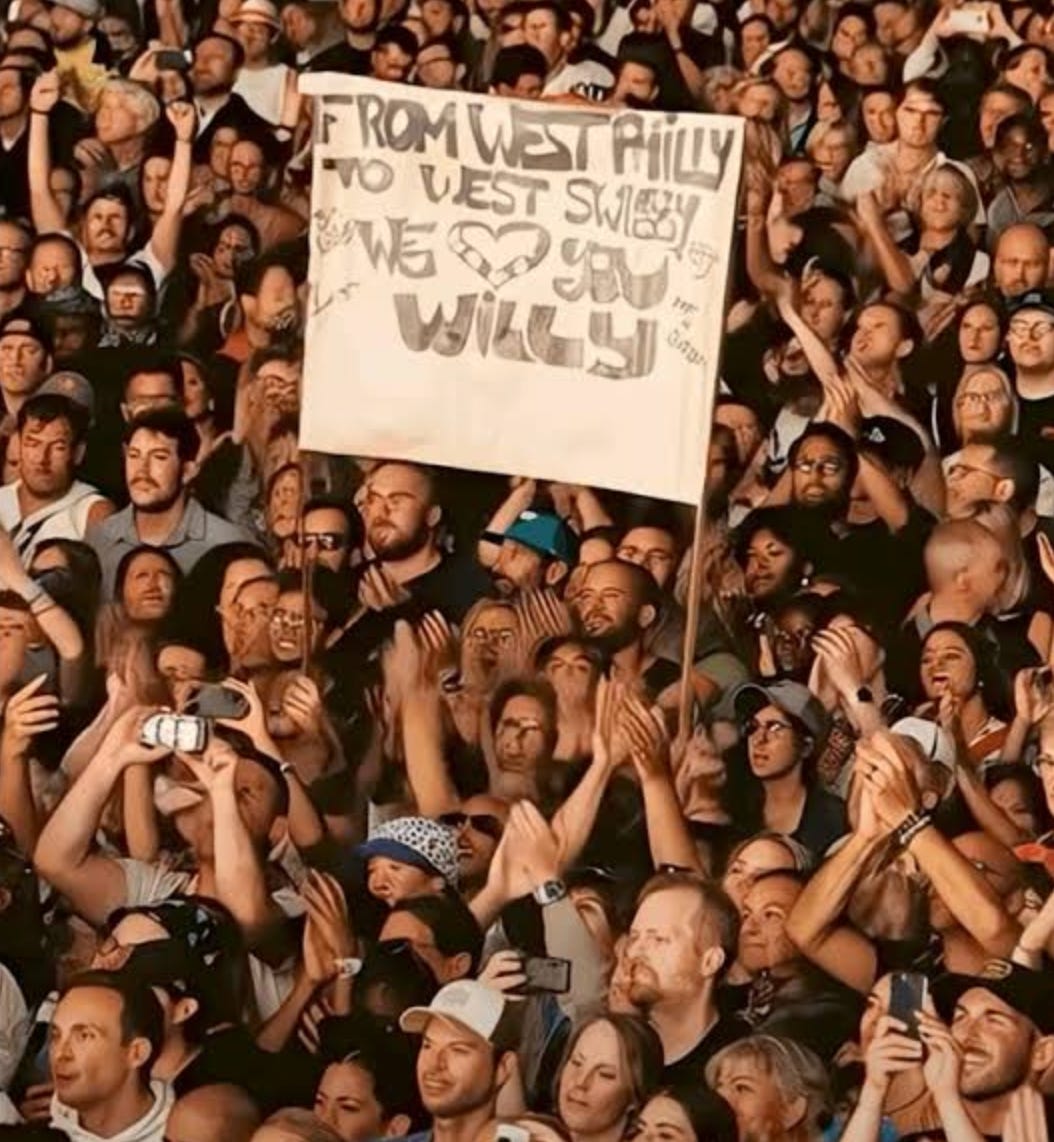
It felt like everyone but me was excited about AI. It can do all your work for you, Meghan! It can answer your emails! It can write your articles for you!
No, it couldn’t. But even if it could, I didn’t want it to.
The enthusiasm almost everyone I knew had for farming out their brains and relationships and creativity to tech baffled me. I liked being human. I liked my work. I liked my relationships with human beings.
My humanity—flaws included—was the whole point of my writing, and my work in general. One of the great gifts of podcasting is that I learn from my guests. One of the great gifts of writing is the process—you come to a better understanding of your subject, of yourself, and of the world around you. I engage with people online, via email, in the comment section, and in real life because it matters to me to do so. I have learned things from these engagements. I have changed my mind about certain issues and beliefs I held because of these engagements. Farming them out to a bot is a loss for me, but also I can’t imagine that my audience would be interested in hearing from a Meghan Murphy bot.
There’s a reason I do everything myself—from the writing, to the editing, to the social media clips, to the responding to emails and messages and comments—and it’s not just because I can’t afford to pay someone to do it for me (though I can’t haha). I want everything I produce and say and share to be completely authentic to me. What would be the point, otherwise? Why would anyone follow me or care what I have to say or subscribe to my Substack or YouTube channel or podcast on Spotify if they weren’t specifically interested in what I had to offer? Why would I choose to be a writer if I didn’t want to write? Why would I produce interviews with people if I wasn’t interested in hearing what they had to say?
There are about a zillion other people with podcasts and opinions out there. The only thing I have going for me is me. And though I despair for a humanity that doesn’t care about its humanity, I suppose that’s the one thing I—and others, overly attached to their slow, messy brains and related ludditery—have as a weapon in this fight against the great robot takeover: Our imperfect, authentic selves, and all the typos and mispronounced words that includes (sorry, I may pronounce “heretic” wrong forever).
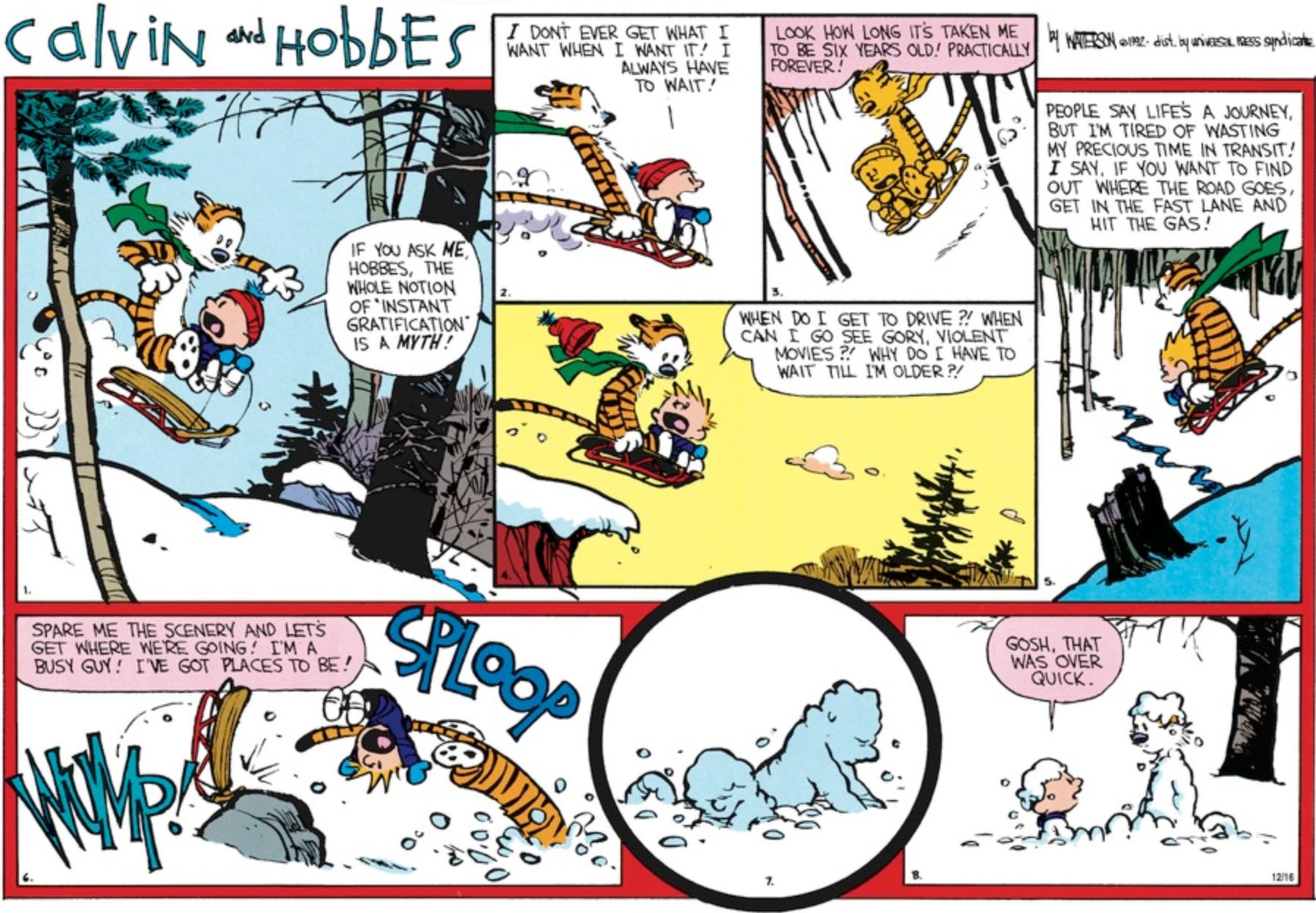
When Chris Best announced a new feature in the Substack app—“Pangram,” a tool that will scan text to detect whether it was written by a human or “with AI assistance”—I thought, to quote Calvin, as I did in my high school year book grad write up (I wasn’t as cool then as I am now), “Gosh, that was over quick.”
This is not to say, of course, that the AI revolution is over—indeed, it’s only just begun its path towards destruction—but I think much of the excitement many felt, anticipating what it might do to human engagement, art, and social/media is on its way out. Almost immediately we were trained to announce “AI” on social media videos featuring animal interactions that made no sense or of Will Smith surrounded by crowds of people with extra fingers, as well as in response to too-perfectly written posts (apparently the em-dash is a giveaway, but I refuse to give it up—I trust you can tell these are my authentic em-dashes). And while many jobs are likely to be farmed out to AI (sorry, transcribers, graphic designers, copywriters, and whoever used to do your social clips for you) writing (actual writing that people want to read), thank god, is not going to be one of them.
Likewise, despite what we’ve been told about the future of podcasting, I very much doubt anyone is interested in listening to an AI version of Joe Rogan.
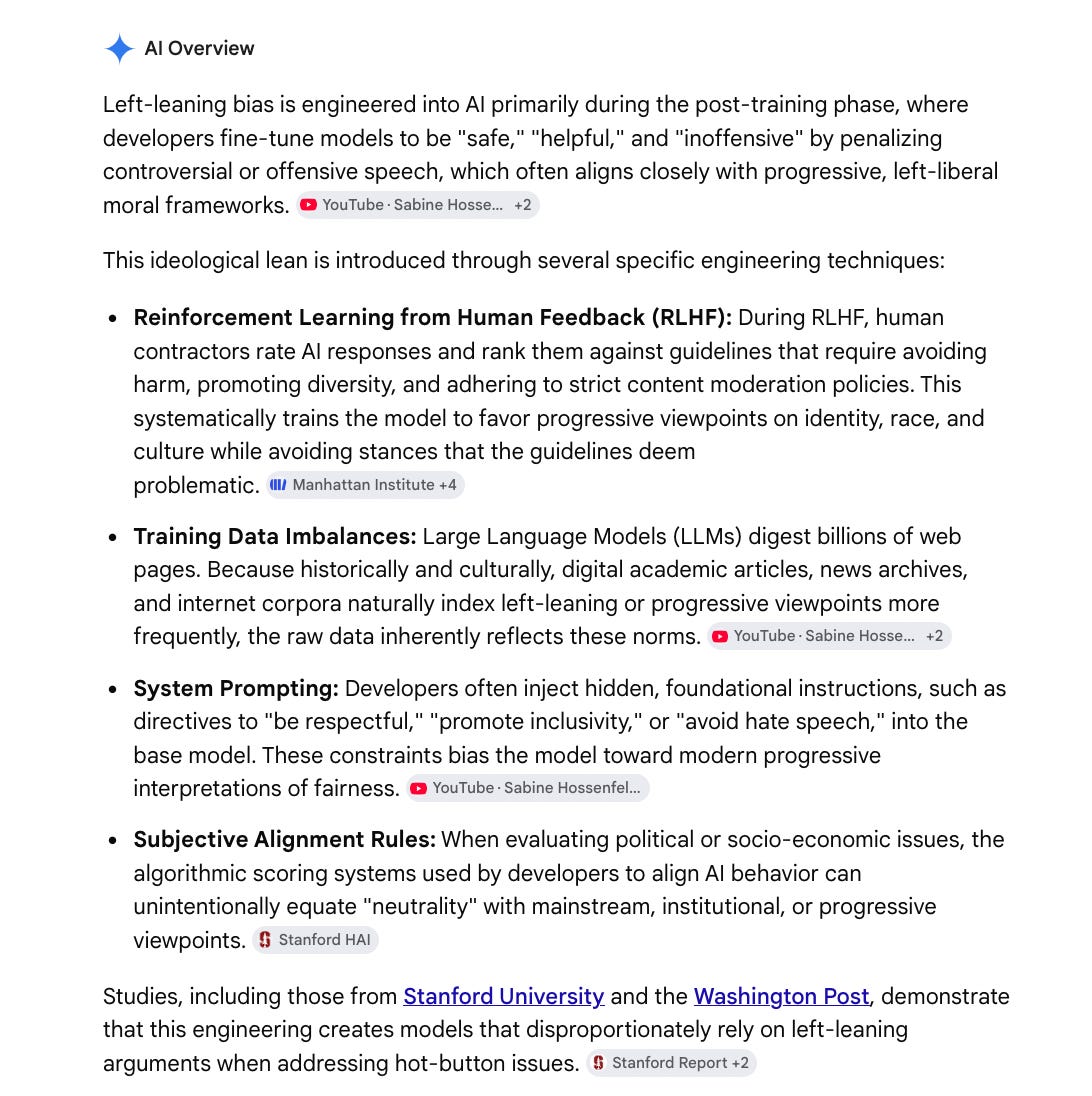
While, sure—your research question can be easily answered by Grok or Google Gemini (keep in mind it still has a good chance of being answered wrong and/or being politically biased—even AI will tell you that!), no one wants the writing, commentary, humour, opinions, or interviews they seek out from commentators, writers, comedians, podcasters, or journalists to come from a bot.
While the fact that Substack needs a tool like Pangram to help you determine what is human and what is botted is perhaps depressing (what kind of “writer” is using AI, anyway?), it’s also good, because it means that humans still want to engage with other humans. They still want the foibles and flaws and (please, please, please?) typos produced by non-robot people. They don’t want a perfect sentence more than they want the sentence to have been written by someone who really means it.
The speed at which AI slop took over social media might have been worrisome if everyone didn’t start detecting it and hating it almost immediately. Yes, the people behind these AI slop accounts might have made more money than me last year, but their longevity is fleeting, and I still have not just a skill they can’t take from me, but a soul. (Hang on to yours, is what I’m encouraging, for the record.)
And there’s more good news! Substack writer, Robin Levine Shobin, published an article last week about the fifty-something “health influencers” hawking “NMN” as the fountain of youth and beauty. They were 57, thin, happy, beautiful, full of energy, and also… not real people.
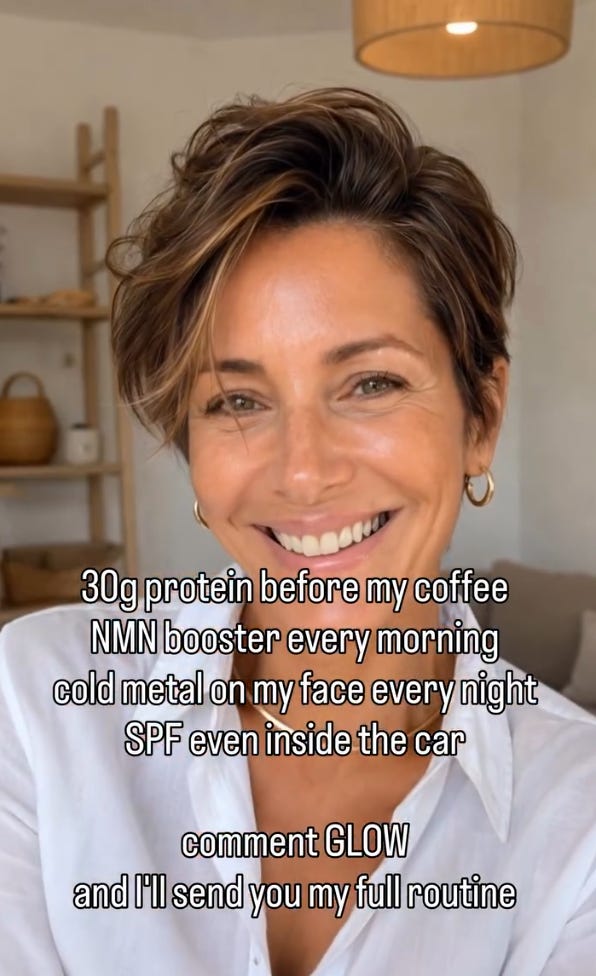
And while it could be maddening to discover you were being sold a lie by an AI lady you can never look like, it is a reminder that almost everything we see on apps like Instagram today is fake. Shobin writes:
“Social media has been slowly blurring the line between reality and fiction for years. First it was airbrushing. Then Facetune. Then beauty filters. Then four-ring-light setups that erase every pore, wrinkle, and skin texture before a video is even uploaded.”
But it’s not just the airbrushing, normalizing catfishing to an extreme degree, it’s that “influencing” itself is fake. The entire endeavor is an embarrassing charade. What kind of person decides to sell a lifestyle, personality, or face that doesn’t exist, all the while pretending to be “authentic”? Perhaps someone who is now worried about being replaced by AI…
Well, good. I hope every “writer,” “content creator,” and “influencer” who has banked on their audience’s inability to differentiate between real and fake is shaking in their boots. I hope that video you posted of your botoxed face pretending to cry, while talking about “embodied truth,” followed by a video about manifestations which is actually a video of you doing a handstand in a thong, is replicated one million times over by an AI lady that’s hotter than you. I hope the creeps you make engagement bucks off of give their clicks to a man in Pakistan instead. I hope they sign up for his OnlyFans account instead of yours.
That’s the thing about selling your soul—there’s a tradeoff. And those who chose profit over integrity and authenticity are perhaps seeing that the downside of this choice is that they are easily replaceable. We are now more attuned than ever to recognize the fake, which means the real now holds more value, and that (I hope) we will actually value the flaws of realness over the sheen of fakeness.
Long live my typos.
I am a living, breathing, independent writer and podcaster with skin and functioning organs. I avoid putting most of my work behind a paywall, because I want humans to read it, but I also depend on (human) subscribers and donors to make a living. If you enjoy my work, please consider becoming a paid subscriber! If you aren’t ready to become a paid subscriber, but wish to support my work, please consider a donation. Many thanks. I appreciate your skin, functioning organs, and support 💞
The problem with AI is that it is a lot of different things being conflated into one term--and not necessarily by you, but by a lot of reporting, writing, etc.
There is certainly the "tell GPT to write a podcast script about xyz with a sardonic voice, etc, etc, etc" and I agree that I don't think there was ever a future in that. Definitely not if you're someone like you who has a unique voice and that's the secret sauce that people are paying for. Same, if you're an artist.
I am a programmer and I've found it to be exceptionally useful in my profession, not because it's taken away the coding (though it's taken away the bad parts of coding), but because I'm paid for my reasoning that has been expressed as coding up until now but now I'm being mostly paid for my reasoning and (software) architecture skills. In my industry, this is incredibly useful.
But in the creative realm, it can also be helpful while leaving the human voice intact. I paint miniatures (spudWorks dot com) and have made tableaus with them that I then have an image generator turn into a style I art direct. I painted the minis. I directed the "photoshop". That creativity is, I believe, mine. Likewise, I like to write fiction. I find Claude to be an outstanding writing coach. I discuss character and themes with it, plot structure and the like but *I* write every word of the story. I think there's a lot of value in that. Same as I use it as a health and fitness coach. I have to do the training but I can get feedback on progress by putting my numbers in.
I agree with you that it's not the work relief panacea that was "promised" but I'm not certain that was ever a lot of value. And certainly not if you want people to pay to hear/read YOU. But it can serve as an editor, a sounding board for you to bounce ideas off of first and I think that is where you can use AI and still be "you".
What absolutely grinds my gears at the moment is "AI voice" in YT videos as a voiceover, but it's supposed to sound like a real person's voice, with pauses, and even some tics thrown in. Like I can sense it within the first few seconds and I immediately switch it off. Also how obsequious the chatbots are (because they've been trained to respond that way). It's all so fkn creepy and gross.